 |
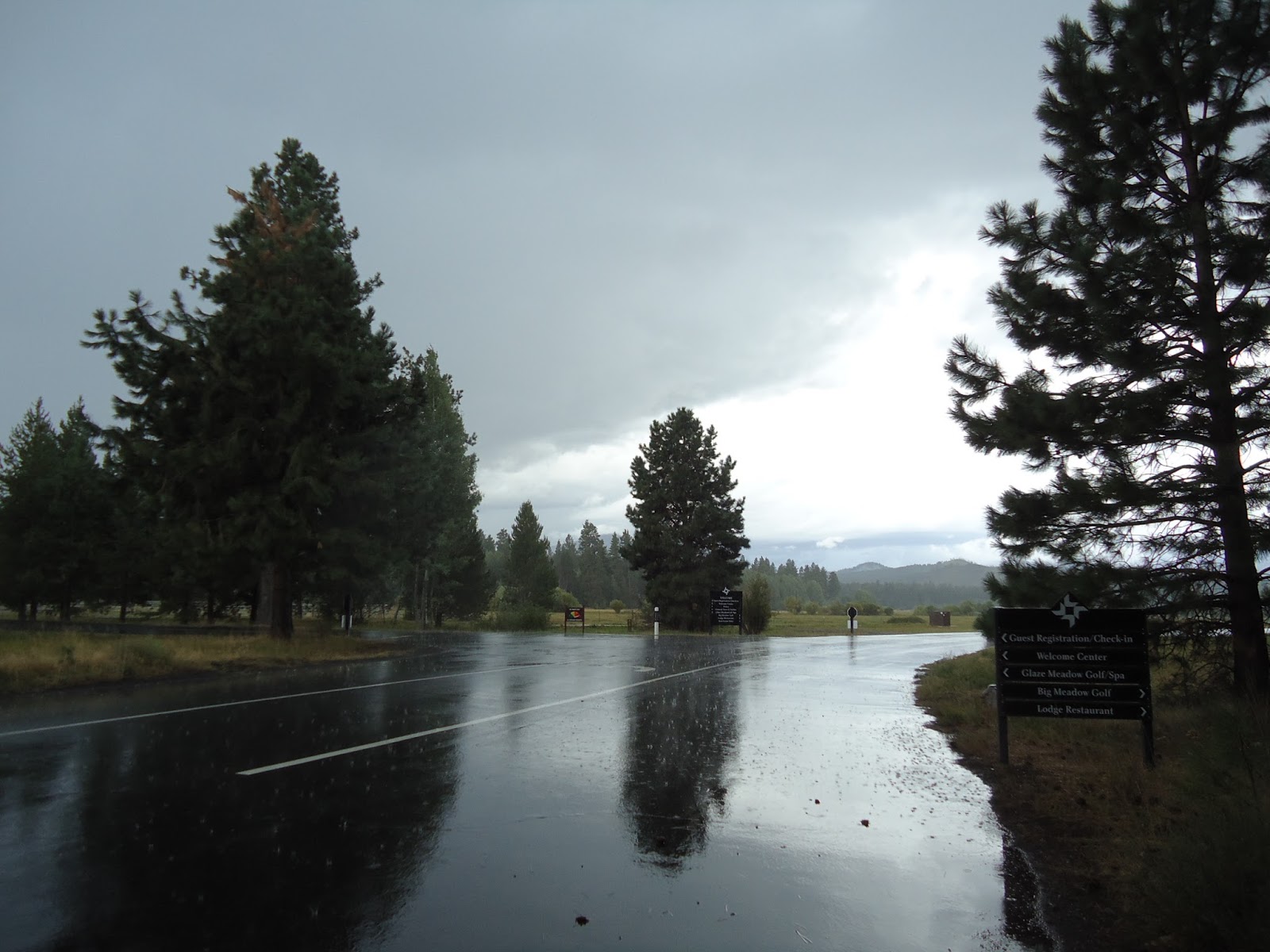
| Thunderstorm in Development |
Another trip cut short, this time by an intensely brutal thunderstorm that I was smack dab in the middle of. And I’ve been around my share of thunderstorms – was in one years ago that dropped golf-ball sized hail. This storm that cut my trip short was deafening loud, and vicious. Before I begin telling my tale of the situation that resulted in me abandoning my journey – I’d like to share how I come about making these hard decisions to abandon said journeys.
I judge my situations by a term that I call “No Forgiveness.” No forgiveness means that if you’re in a situation and something happens, your circumstance becomes dire. For me to make the decision to give-up on a quest takes more than one problem presented to me. I don’t quit because it’s raining. I live in the Pacific Northwest on the west side of the Cascade Mountains. If you don’t ride a bike in the rain, you don’t ride a bike. Sunshine here is the exception to the rule, it rains here. When I ride my bike into the mountains for a seven to ten day journey, I come prepared.
Riding into the mountains on a bicycle takes preparation. I can’t just hop onto the bike riding somewhere that’s fifty miles from the nearest town, and hope for the best. I can be wet in 45 degree temperatures and be warm at the same time. I have the gear to help me. If my bike malfunctions, in most situations I can fix the problem. If my cooking stove stops working in the field, I have a kit that will allow me to repair it with genuine parts. If I run out of white-gas for my stove, I can use gasoline from a car, diesel fuel, jet fuel, and just about anything else that’s combustible. Accidents and tragedies happen when people place themselves, usually unwillingly, into situations that offer no forgiveness.
I will give you a portrayal of placing myself into a No Forgiveness situation. On a bicycle tour I decide to take the scenic route through a mountain pass, and in doing so I know I’m going to need to camp out. I pack enough supplies like water, food, fuel for the stove, heading out for the detour to my intended destination. I arrive at camp setting up my gear. In the evening I meet a fellow tourist and we decide to hike a trail we’ve discovered. But, feeling confident, I don’t pack a small sack with items that could essentially save my life. The fellow I’m hiking with does have a day pack with him. He carried with him: A pack of dehydrated food, water, water purification system, fire starting kit, cordage, and perhaps a few clothes. I have just the clothes I’m wearing: blue jeans, a sweat shirt, and tennis shoes. The fellow, and I, end up getting lost and separated from one another, and we’ve been forced to stay the night in the wilderness. I’ve just ended up in a No Forgiveness situation. The other guy, well he’s got options. He can start a fire easily, he can drink clean water, eat food, and even change his clothes should they get wet. Me, I’m now susceptible to becoming hypothermic. The comfortable cotton clothes I’m wearing lose their insulating values when wet. I don’t have food, water, or way to attract attention. My situation is now dire, and loss of life is a worry – No Forgiveness.
When I’m presented with a situation I feel that offers No Forgiveness, it’s because there is more than one variable presented to me placing me at great risk. I will use my trip where I tried to reach Yosemite, illustrating the issues I faced which made me feel ending the trip was necessary. That said, let me say this: If a person is traveling across the country the touring cyclist can negotiate weather systems. Oftentimes the cyclist can hunker down for a while before pedaling beyond the system. But when a cyclist has an intended destination requiring a route that has been chosen specifically, situations become different.
26 May 2013 I left Klamath Falls, Oregon on my bicycle intending to reach Weed, California. I didn’t make it, and in route, I ended my journey. The situation I faced was multifaceted. First, I didn’t like how my shoulder had disappeared on a dogleg left corner that arose, and then falling away. Second, my soft gravel shoulder I used as a bailout came with a five foot drop off for the unforeseeable future. Thirdly, the shoulder on the highway was listed as two to four feet wide; but in reality was no more than six inches wide. Furthermore, the truck traffic was unpredictable, the wind speed was high (the panniers on a bicycle act as a kite and the wind can actually steer the bike), the weather forecast was for thunderstorms near Mount Shasta, and the snow level was listed at five-thousand feet. Arriving at the dangerous dogleg with an eighteen wheeler on my six, I had to make some decisions.
Sitting at dogleg bend to the left with a brief line of commercial trucks behind me, I needed to make some decisions. My first decision was to bicycle around the corner. So, I got out onto the highway and proceed to fight against the wind, but every single time I came close to the corner I couldn’t see the highway from the way it bent and fell away. So every time, I pulled back around into the rest area that was north of this dogleg. This corner made my stomach churn. I couldn’t get my speed up due to the wind to quickly negotiate this bend. So I pulled out my maps and plotted a detour around this dangerous section of highway. My only option was to take highway 39 out of Klamath Falls and reconnect with my route on the south side of Mount Shasta. Doing so would put me in an elevation higher than the predicted freezing level. I had the clothing to keep warm, and enough food. However, how would I keep my water from freezing. Without liquid I can’t cook nor drink. My other option was to go through Susanville, California and on into Reno. But I’ve driven that route and was not interested in cycling such. I wanted to explore the route I had planned, researched, and spent months preparing. So, my options around the bad piece of highway that offered me impaired sight distance, no shoulder, and a deep ditch on the side of the highway, presenting me with a No Forgiveness situation were limited. The detour that I found on the map placed me into possibly freezing conditions for an indeterminable amount of time, with limited services. The second route directly into Reno, Nevada avoiding the mountains all together was not an option. I had avoided the mountains all the way through Oregon. My entire trip was based on riding through the Cascades, and Sierra Nevada Mountain Ranges. The other problem was the snowy weather forecasted for Mount Shasta. I had only one option, to attempt the dogleg left with impaired sight distance placing myself into a No Forgiveness situation.
I don’t quit just because it’s snowing, or raining, or the hills are too steep, or the wind is blowing… No I quit when I feel my life may be placed at unnecessary risk for what I’m looking to accomplish.
 The Naturally Aspirated Adventures of Tim